


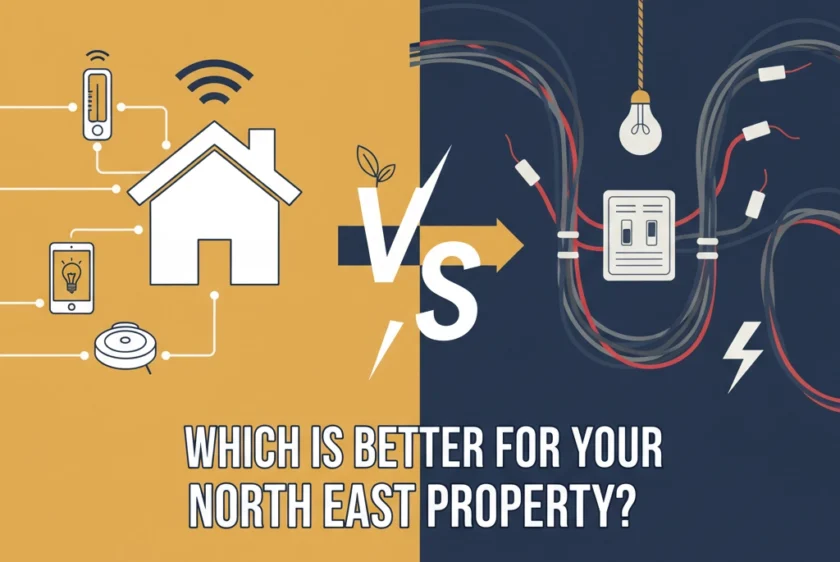
Choosing between smart home technology and traditional wiring for your North East property isn't just about following the latest trends. It's about making a decision that impacts your energy bills, property value, and daily convenience for years to come.
Whether you're a homeowner in Newcastle planning a renovation or a business owner in Gateshead looking at commercial property maintenance, the right electrical system can save you thousands. Let's cut through the marketing fluff and look at what actually works.
Smart Home Technology: The Modern Approach
Smart home wiring systems have moved beyond fancy gadgets. They're becoming essential infrastructure for energy-efficient properties across the North East.
Energy Efficiency That Actually Saves Money
Smart systems deliver power precisely where and when it's needed. No more juice flowing to empty rooms or unused outlets 24/7. For commercial handyman services, this means significant cost reductions for business clients dealing with rising energy prices.
Your smart thermostat learns your patterns. Your lights switch off automatically. Your heating adjusts based on occupancy. These aren't small savings: they add up to hundreds of pounds annually for typical North East properties.

Security and Remote Control
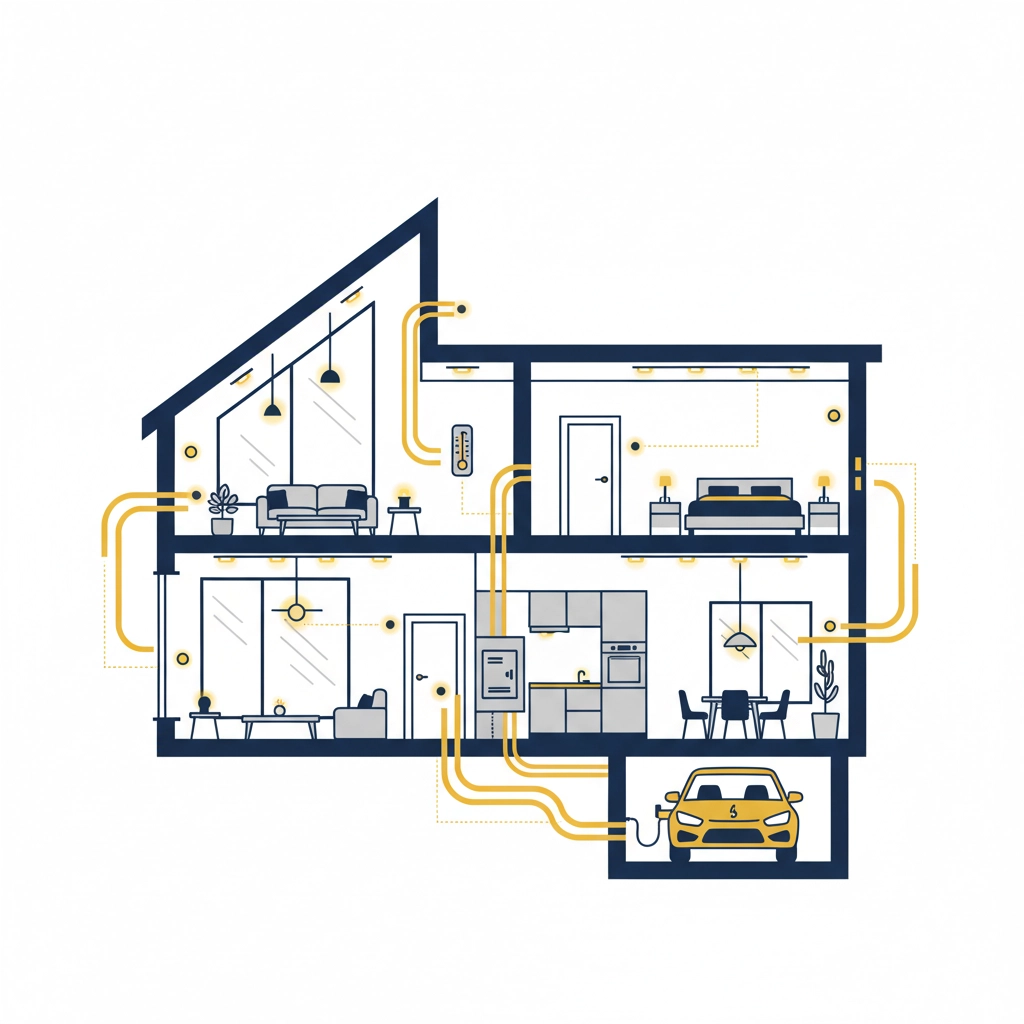
Smart security systems let you monitor your property from anywhere. Motion sensors, smart cameras, and connected door locks provide real-time alerts. For commercial buildings, this level of monitoring can prevent costly break-ins and vandalism.
Remote access means you can adjust heating before arriving at the office or check if you left lights on at home. It's convenience that actually improves your life rather than complicating it.
Future-Proofing Your Investment
Smart wiring infrastructure adapts as technology evolves. Adding new devices often requires just plugging into existing network connections. For commercial property maintenance services, this flexibility means fewer disruptive upgrades down the line.
Compare this to traditional systems where adding a single new circuit can mean ripping up walls and rewiring entire sections.
The Downsides of Smart Systems
Higher upfront costs hit immediately. Smart switches, thermostats, and PoE-compatible devices cost more than standard alternatives. Installation by a qualified electrical handyman who understands smart systems can also command premium rates.
Software updates and connectivity issues create new maintenance headaches. When your traditional light switch breaks, you flip the breaker and replace it. When your smart switch fails, you might need network troubleshooting, firmware updates, or app configuration.
Battery-powered smart devices need regular battery changes. Forgotten maintenance can leave you locked out or without heating control at the worst possible moments.
Traditional Wiring: The Proven Foundation
Traditional electrical systems have powered North East properties reliably for decades. They work, they're understood, and they don't require Wi-Fi passwords.
Lower Initial Investment
Standard electrical components cost significantly less than smart alternatives. A basic light switch costs £5. A smart switch starts at £40. Multiply this across an entire property, and the difference becomes substantial.
Local handyman services can handle traditional wiring repairs and upgrades without specialized smart home training. This keeps maintenance costs predictable and contractors available.

Reliability Without Complexity
Traditional systems work independently of internet connectivity, software updates, or network configurations. Power flows when you flip the switch: no apps required.
For commercial electrical work, this reliability proves crucial. A restaurant doesn't want smart ovens that stop working due to network issues during dinner service.
Established Expertise
Every qualified electrician understands traditional wiring. Finding help for repairs, upgrades, or PAT testing services is straightforward across Newcastle, Gateshead, and the wider North East region.
Parts are standardized and readily available. Emergency repairs don't require ordering specialized smart components with extended delivery times.
Traditional Wiring Limitations
Energy efficiency lags significantly behind smart alternatives. Power flows constantly to outlets regardless of usage. Long cable runs create power losses that smart systems avoid through optimized delivery.
Scalability becomes expensive quickly. Adding new circuits requires running cables, installing breakers, and potentially upgrading panels. For commercial handyman projects, this often means shutting down sections of buildings during installations.
Limited flexibility restricts future changes. Moving an outlet or switch requires rewiring: disruptive and costly compared to smart systems where devices relocate easily.
Head-to-Head Comparison
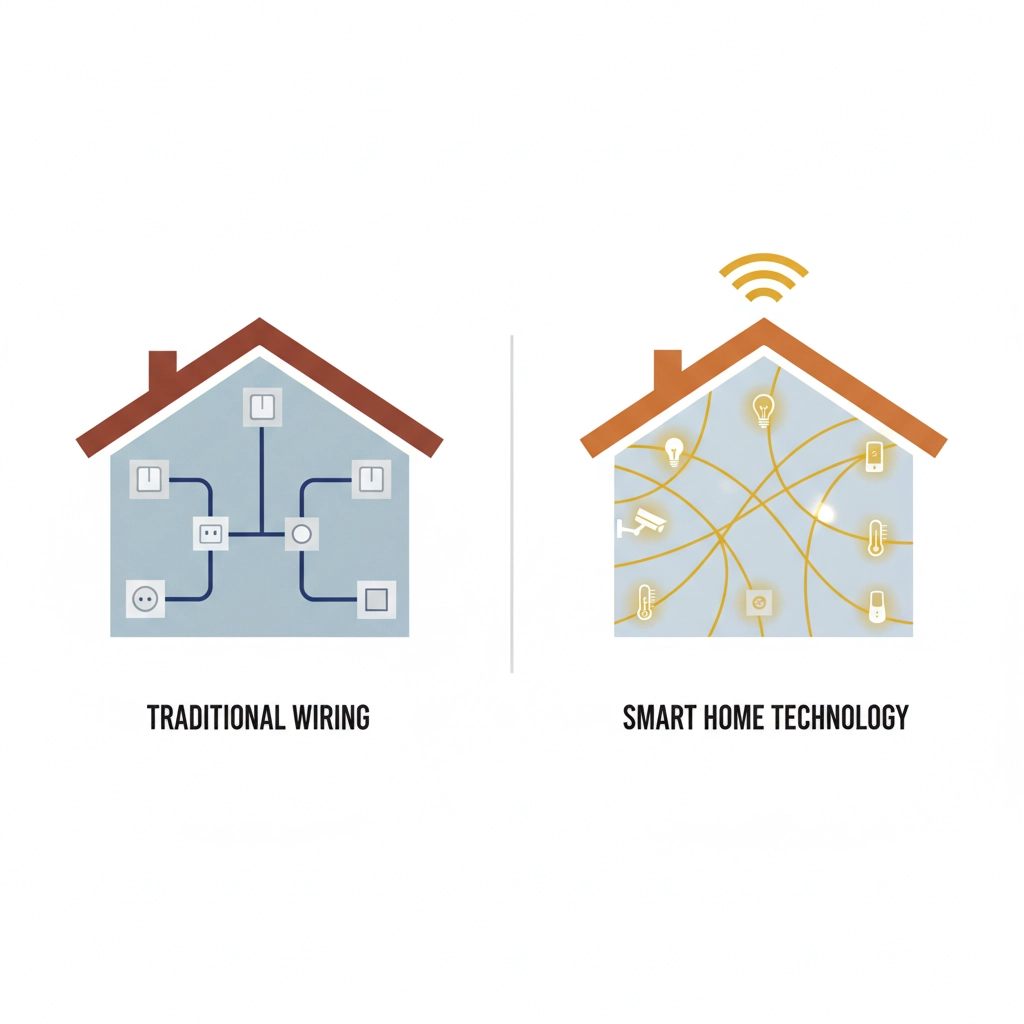
Initial Costs: Traditional wiring wins on hardware pricing, but smart systems often offset this through reduced installation complexity. A handyman electrician near me might charge less total project costs for smart pre-wiring during construction.
Energy Efficiency: Smart systems deliver measurable savings through optimized power delivery and automated controls. Traditional systems waste energy through constant power flow to unused outlets.
Maintenance: Traditional systems require basic electrical maintenance that any qualified electrician handles. Smart systems need software updates, network troubleshooting, and occasional device replacement.
Scalability: Smart systems expand through network connections with minimal disruption. Traditional systems require cable runs, panel upgrades, and often building modifications.
Reliability: Traditional systems work independently of external factors. Smart systems depend on network connectivity and software stability but offer redundancy through backup modes.
What Works Best for North East Properties?
Choose Smart Systems If:
- You're building new or undertaking major renovations
- Energy efficiency and long-term cost savings matter
- You want integrated security and remote control capabilities
- The property needs frequent layout changes or equipment moves
- You're planning commercial CCTV installation or advanced security systems
Stick With Traditional If:
- Budget constraints limit upfront investment
- The property rarely changes configuration
- Reliability trumps convenience features
- Maintenance staff lack smart system experience
- You're making minor updates without major renovations
Consider Hybrid Approaches For:
- Phased renovations where different areas get upgraded over time
- Commercial property maintenance projects with varying technology needs
- Properties where some areas benefit from smart features while others need basic reliability
Making the Decision for Your Property
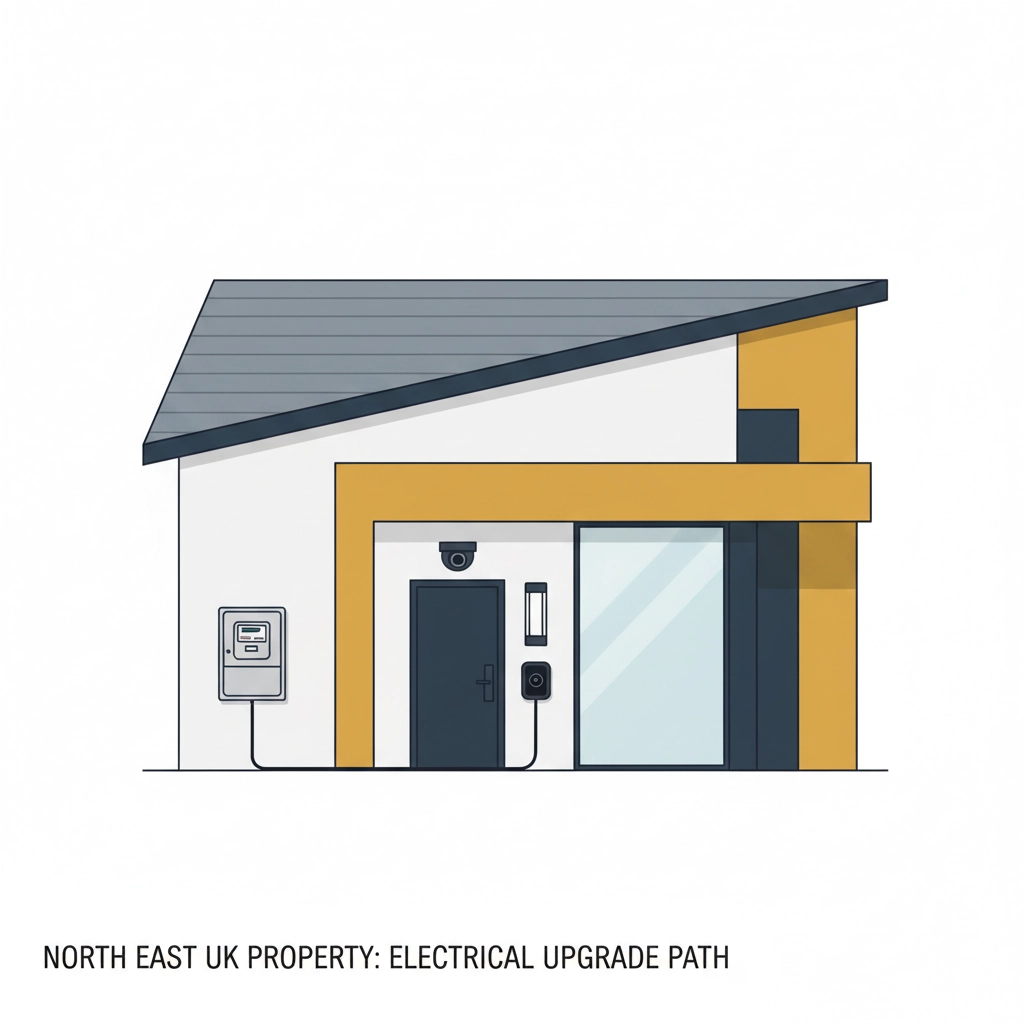
Most North East properties benefit from smart technology when implemented during construction or major renovations. The key is proper planning and installation by experienced property maintenance services who understand both traditional and smart systems.
For commercial properties, smart systems often pay for themselves through energy savings and improved security. Retail spaces, offices, and restaurants see immediate benefits from automated lighting, climate control, and security monitoring.
Residential properties gain convenience and energy efficiency, but the financial payback depends on usage patterns and energy costs. Families who travel frequently or have irregular schedules see greater benefits than those with consistent daily routines.
PAT testing for businesses becomes more complex with smart systems but offers better monitoring and compliance tracking capabilities. Traditional systems keep testing straightforward but provide less operational insight.
Getting Professional Guidance
The choice between smart and traditional wiring affects your property for decades. Commercial handyman services with experience in both approaches can assess your specific needs, usage patterns, and budget constraints.
Proper installation matters more than the technology choice. Poor smart system installation creates reliability problems that eliminate energy savings benefits. Inadequate traditional wiring limits future expansion options and creates safety risks.
Whether you choose cutting-edge smart technology or proven traditional wiring, working with qualified electrical handyman professionals ensures your North East property gets the electrical infrastructure it needs to serve you reliably for years to come.
Ready to discuss your property's electrical needs? Get in touch with our team for honest advice about which approach works best for your situation and budget.